Qyralvenox
Slate Pattern
Slate Pattern
Couldn't load pickup availability
1. Problem Statement
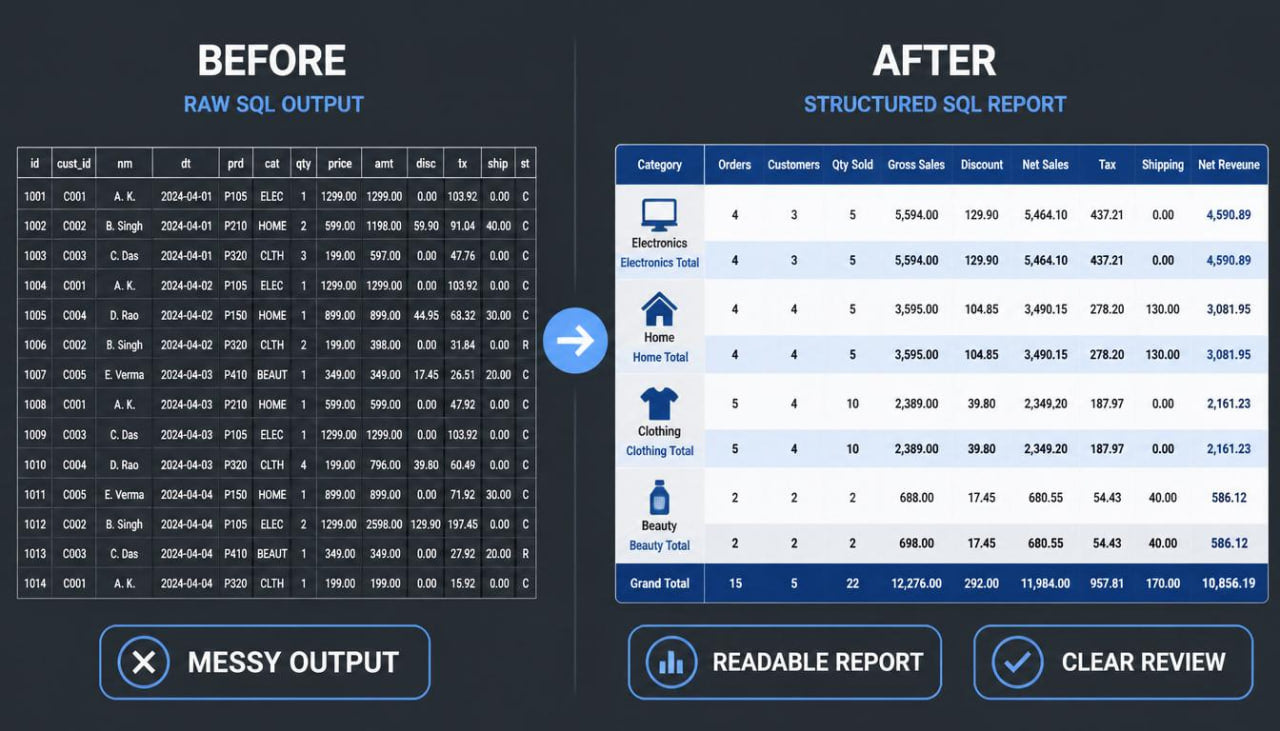
After learners understand joins and larger query structure, the next challenge is making query results useful for review. A statement may return correct rows, yet the output can still feel messy, crowded, or difficult to interpret. Learners may struggle with grouped summaries, calculated fields, labels, and comparison columns when several ideas appear in one result. Reporting-style SQL also asks for careful thinking about what should be counted, grouped, filtered, or displayed. Slate Pattern addresses this stage by guiding learners through organized query shapes for cleaner data review.
2. Solution
Slate Pattern teaches SQL through repeatable reporting patterns that connect syntax with readable results. The course shows how to prepare grouped summaries, comparison outputs, and category-based views in a calm sequence. Learners study how filters, aggregates, calculated columns, and ordering work together inside practical reporting tasks. Each module explains the purpose of the query pattern before showing how the statement is built. The course helps learners improve their ability to turn a data question into a tidy result table.
3. What’s Inside
Slate Pattern begins with a module on result design. Learners study how to decide which columns belong in the output, which details should be grouped, and which values should be calculated. This section helps learners think about the final table before building the query line by line.
The next module focuses on grouped summaries. It explains how to count records, total values, compare categories, and read the difference between raw rows and summarized output. Learners work through examples where small changes in grouping produce different results, which is important for avoiding confusing reports.
A separate section covers calculated fields and readable labels. Learners practice creating output columns that make results easier to scan, including category labels, adjusted values, combined text fields, and simple comparison markers. The course also explains how naming choices affect the readability of a result table.
Slate Pattern includes a module on report filtering. Learners study the difference between filtering rows before grouping and filtering summarized results after grouping. This helps learners understand why two similar queries can return different tables.
The course also includes ordering and layout exercises. Learners practice arranging results by category, date, count, or calculated value so the output supports review without extra cleanup. The final section brings the course together through scenario-based tasks. Each scenario starts with a plain-language reporting question, moves into planning notes, then builds the SQL statement in stages. Learners finish by checking whether the result table matches the original question.
4. Who Is This For?
Slate Pattern is for learners who already know core SQL structure, joins, and basic aggregation. It suits learners who want to create cleaner summaries and comparison tables. It is also useful for people who want more practice turning broad data questions into organized SQL output.
5. What You’ll Learn
- How to plan a result table before writing a query
- How grouped summaries change raw data into review-ready output
- How to count, total, and compare values by category
- How calculated fields can make results more readable
- How labels and aliases shape cleaner output
- How to filter before and after grouped summaries
- How to order result tables for practical review
- How to build reporting queries from plain-language questions
6. Refund Note
Slate Pattern includes a 30-day refund window according to the checkout terms shown at purchase. Learners may review the course materials during that period and decide whether the course format fits their study needs.
Self-paced learning overview
- 📁 Digital file available after purchase
- 📌 Long-term availability
- 🔐 Secure checkout
- 🗓️ Content updated in 2026
Do I need prior SQL knowledge?
Do I need prior SQL knowledge?
No. Qyralvenox courses are written for learners who want structured SQL study from the ground up, with clear explanations and practical tasks.
What format are the materials in?
What format are the materials in?
Each plan includes written lessons, guided modules, examples, and practice tasks arranged by topic.
Can I choose a higher plan later?
Can I choose a higher plan later?
Yes. The plans are arranged in growing depth, so learners can begin with a smaller set and later move into broader collections.
Share